Overall Wellbeing & Symptoms
4 mins read
Monitoring wellbeing with IBD: Why tracking your overall health matters
Understanding your whole body
IBD isn't just about what happens in the bathroom; it’s a whole-body experience. Tracking your overall wellbeing means looking at both the visible and invisible parts of your health—like your energy levels, joint pain, infections, stress, mood, and more. By logging these together, you start to see the big picture and truly get to know your own body. Every journey with IBD is unique, which is why it’s so important to understand your own specific patterns. This helps you understand your own experience more clearly, and if you choose to share your logs with your care team, you'll have something concrete to refer to. Because IBD is closely tied to your nervous system, simply noticing when you feel 'off' or extra tired becomes easier to recognise over time when you log consistently.
Why tracking overall wellbeing actually matters
Think of tracking as your personal health diary. Research shows that patients who log consistently feel better prepared for clinical conversations and report a greater sense of control over their IBD (MDPI, 2026). By noticing patterns in how you feel — like how stress tends to affect your symptoms — you build a clearer picture of your own experience over time (MDPI, 2025). It also means you walk into your next appointment with something concrete to refer to, rather than trying to recall the past few months from memory. Research shows that patients who bring structured tracking data to appointments report more productive clinical conversations - which is why logging consistently matters.
You're the expert on your body. Chronicare just helps you keep the record.
How to track your overall wellbeing & symptoms with Chronicare
Meet Your Health Bubble
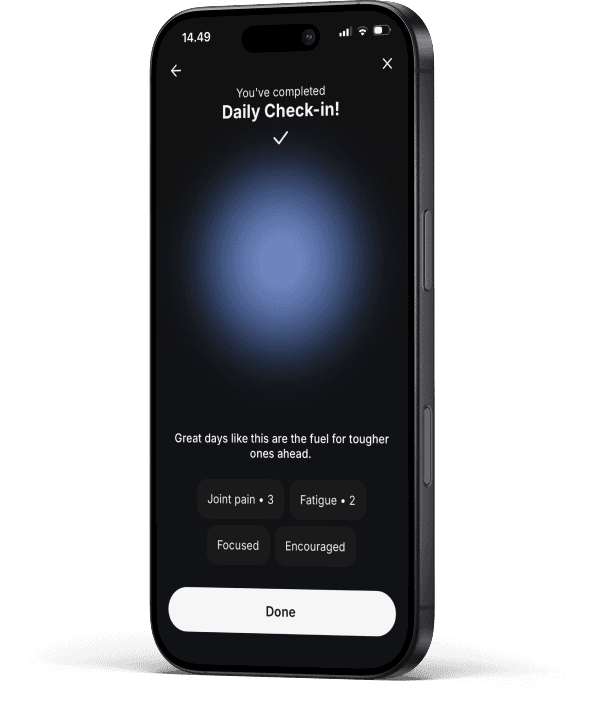
Think of the Health Bubble as your daily check-in with yourself. In just two clicks, you get a visual snapshot of how you're feeling — because IBD isn't just one-dimensional. The outer layer reflects your physical wellbeing, while the inner core captures your mental state. As you check in, the bubble shifts colour based on what you log: it can reflect the full range of how a chronic condition actually feels day to day. It's a quick, intuitive way to take stock of yourself before you get on with your day.
Going deeper: Tracking your symptoms
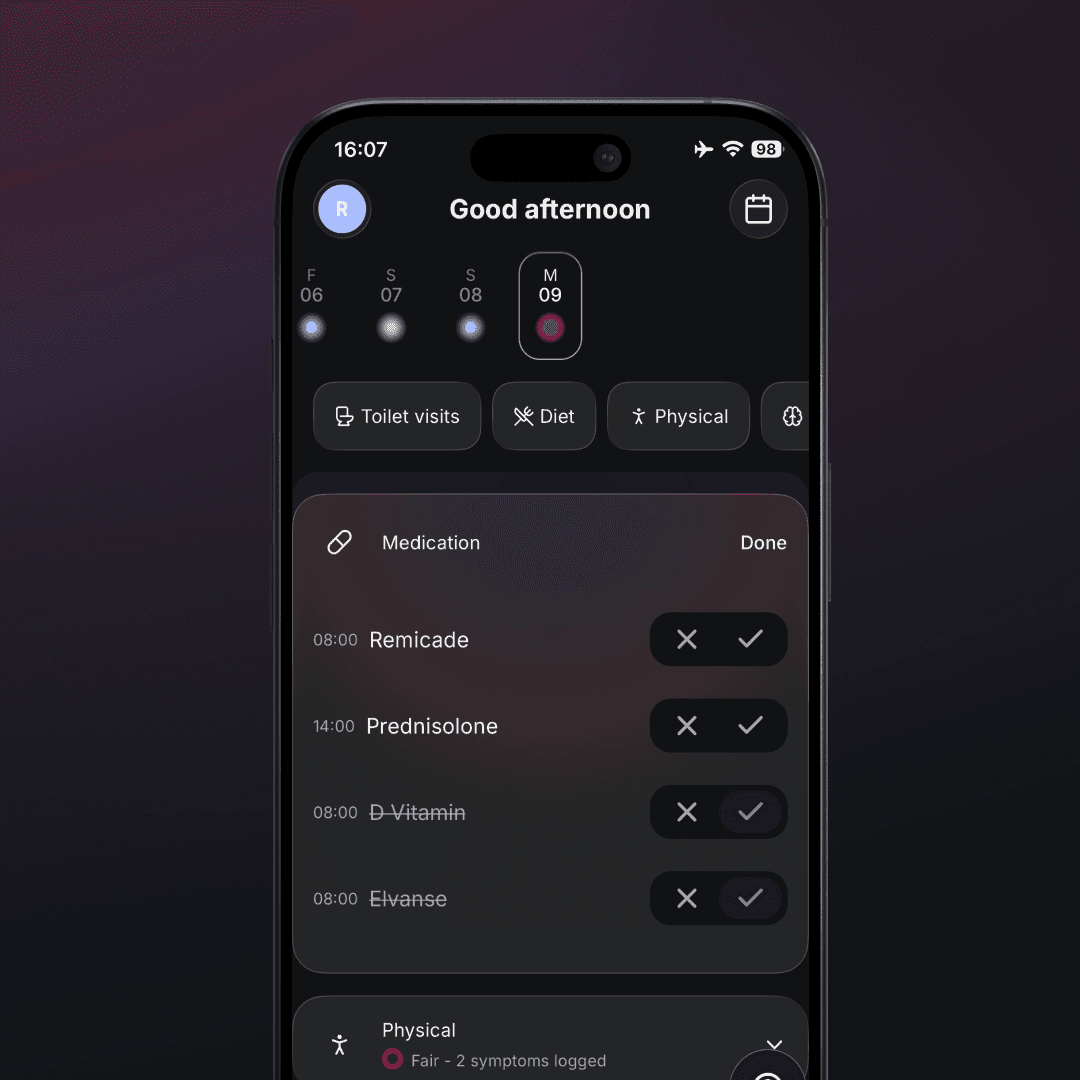
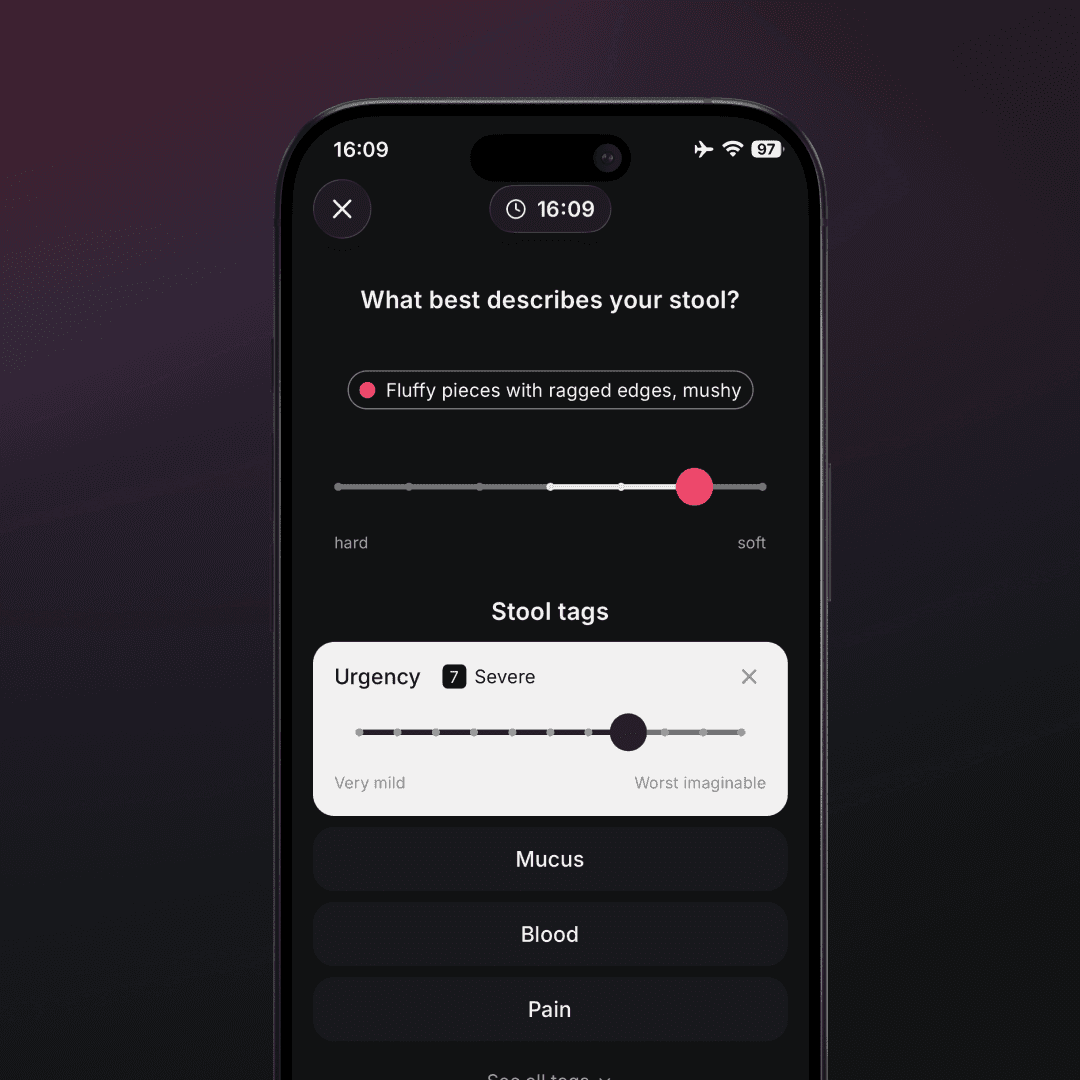
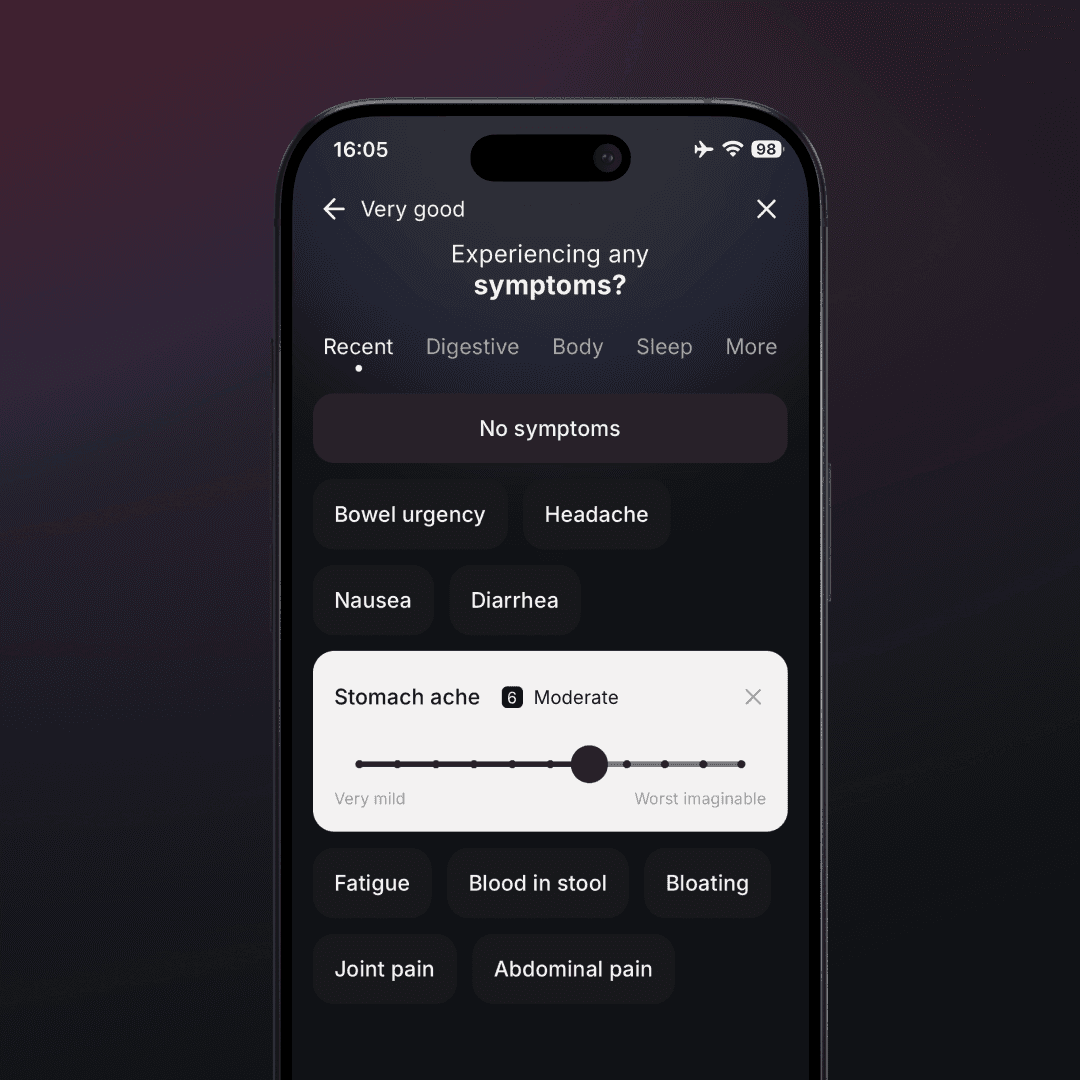
Once your bubble is set, you can log the details behind it. Beyond bathroom habits, you can record symptoms that affect daily life — fatigue, brain fog, urgency, pain, and sleep quality — as well as things that often accompany IBD like skin irritations or joint aches.
By capturing these details consistently, you build a personal record of what your IBD actually looks like over time. If you ever want to refer back to how you were feeling in a given period — or share that context with someone else — it's all there.